Every year, families enter the college admissions process armed with information but short on understanding. They've read the articles, scrolled the forums, and compared notes with neighbors. They know the acceptance rates at selective universities. They've heard stories — the student who got in despite lower...
At this year’s IECA conference, I attended a compelling session featuring Matthew McGann, Vice President and Dean of Admission at Amherst College, and Jordan Pascucci, Vice Dean and Director of Admissions at the University of Pennsylvania. Through a series of case studies, they offered a...

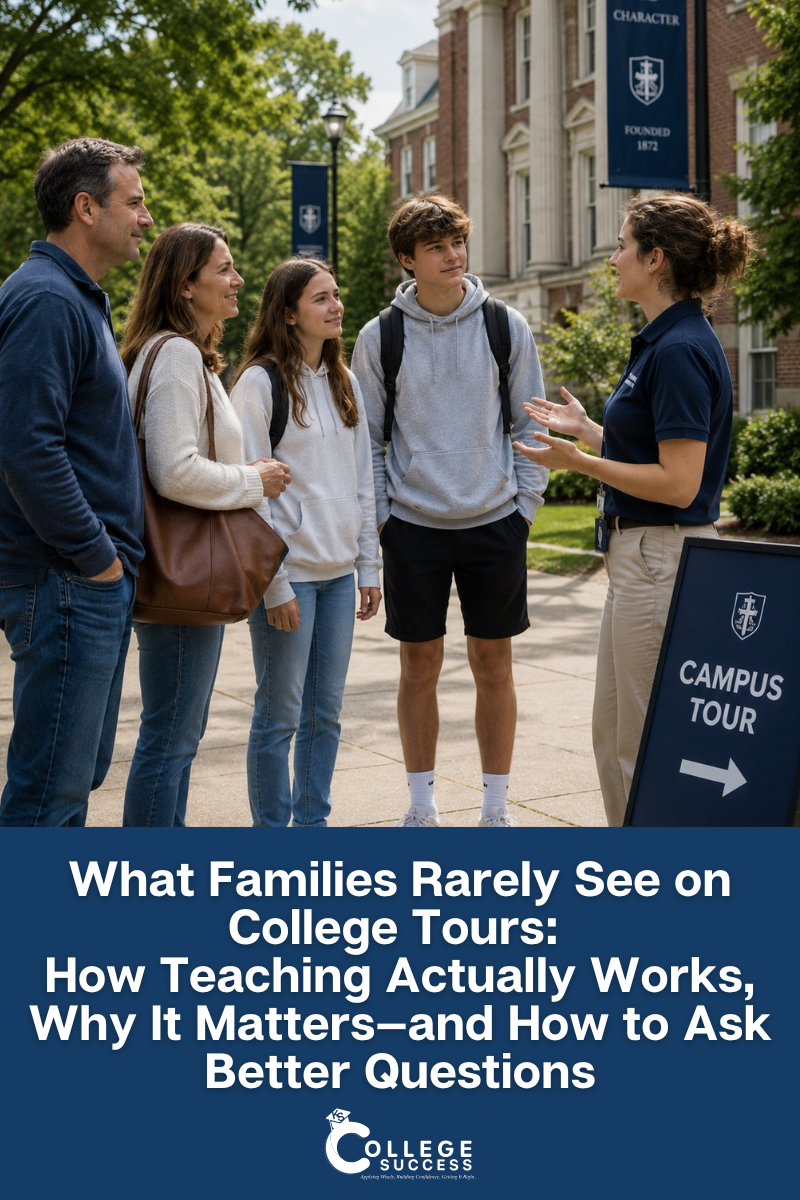
When families visit college campuses, the experience is carefully curated. Tours highlight residence halls, dining facilities, research labs, athletic complexes, and student life spaces. What families almost never see is the part of college that most directly shapes a student’s intellectual growth: the classroom. This omission...

Each year, as application season approaches, students and families search for certainty: a formula, a template, a model that guarantees an essay “that works.” The instinct is understandable—college admissions can feel opaque and increasingly competitive, and these examples feel reassuring—tangible proof that success is possible...

In the United Kingdom, universities like Cambridge and Oxford ask applicants not just what they’ve done, but what they’ve learned—and how they’ve pursued that learning beyond the classroom. They use a term unfamiliar to most American students: supercurriculars. What “Supercurriculars” Mean in the U.K. Supercurriculars are activities...

Each winter, a familiar epidemic begins to sweep through high schools across the country. Its symptoms are subtle at first—missed assignments, waning motivation, muted participation—but by spring, it can be contagious. The name? Senioritis. After years of effort, testing, and college applications, many seniors feel they’ve...